The Ultimate Singapore Condo Balcony Guide: Is ZipScreen Worth the Investment?
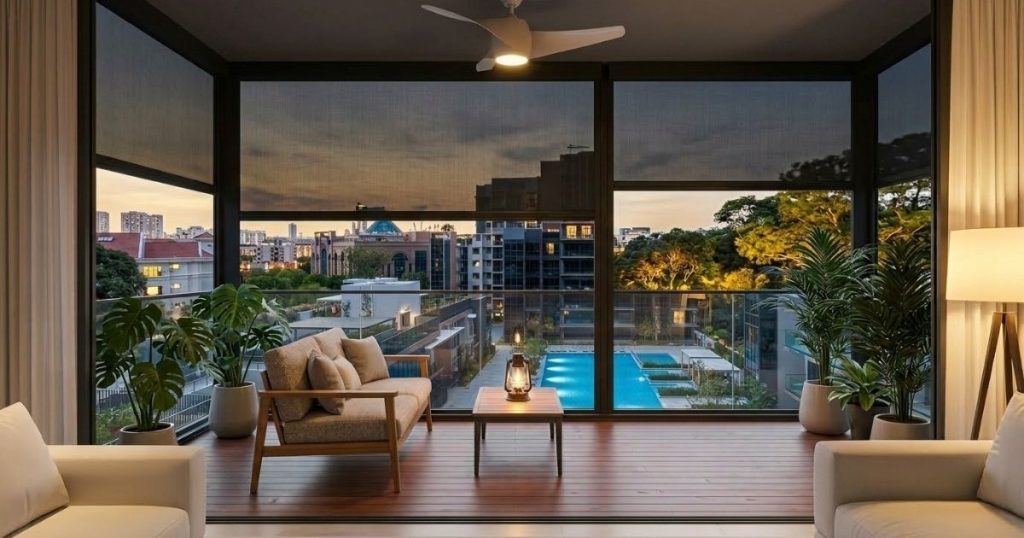
Stepping out onto your brand-new condominium balcony along the green corridors of Tampines or next to the breeze-filled parks of Pasir Ris is an incredible feeling. You finally have a slice of the outdoors all to yourself. But let’s be entirely honest—within just three weeks of collecting your keys, the reality of Singapore’s tropical climate sets in.
One afternoon you are dealing with blinding, sweat-inducing afternoon heat reflecting off nearby glass facades. The next evening, a sudden monsoon downpour turns your beautiful outdoor furniture into a soggy mess.
If you have scrolled through local home renovation threads on Reddit or spoken to your neighbours at the estate’s lift lobby, you have definitely heard the ultimate recommendation for this exact problem: Zip Blinds. But with premium tracking systems dominating the market, are they truly worth the investment?
At Ecohaus, we are a homegrown Singapore window furnishing specialist. We have spent the last 14 years measuring, customizing, and installing shades for over 10,000 local homes. We know exactly what details make a real difference in our intense heat and humidity. No fluff, no aggressive sales pitches, and no high-pressure “hard sells”—just a transparent, practical look at how to reclaim your balcony square footage.
What Exactly Are Zip Blinds (And How Do They Work)?
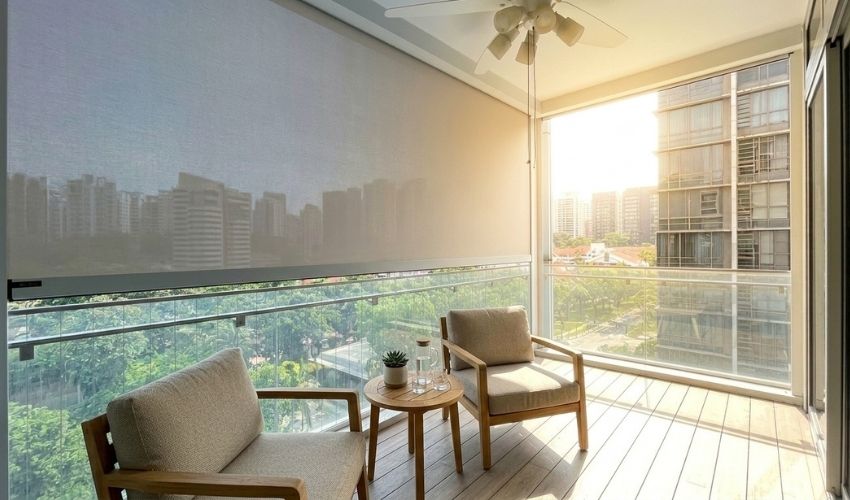
Unlike traditional outdoor bamboo chicks or basic roller shades that flap violently when a heavy storm hits, zip blinds are heavy-duty outdoor shading systems designed specifically to seal your balcony from the elements.
The secret lies entirely in the tracks. The edges of the fabric feature a specially designed locking core that slides securely inside side channels made of high-grade aluminium.
The Core Technology Breakdown
- The Side Tracks: These are anchored directly into your balcony columns or parapet walls. The tight seal prevents strong winds and driving rain from cutting through the sides.
- The Weighted Bottom Bar: A heavy bar sits at the bottom of the fabric, ensuring it remains taut, flat, and wind-resistant even when a heavy breeze blows through.
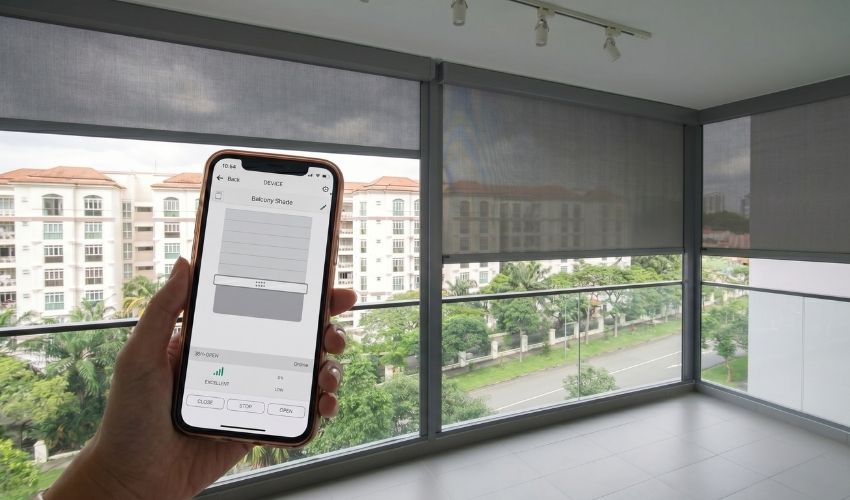
- The Motorized System: Most modern setups utilize smart motors, allowing you to raise or lower the fabric via a remote control, smartphone app, or home automation systems to make your outdoor shade smart.
When you fully lower a premium system like an outdoor ZipScreen, you are effectively creating a completely sealed, weatherproof wall. It transforms an open-air balcony into a comfortable, functional extension of your interior living area.
The Reality Check: Addressing Singapore Condo Friction Points
Let’s address the most common, unvarnished questions local homeowners ask before dropping their hard-earned money on a tracking system.
1. Is my balcony actually going to be usable in the afternoon?
Without proper protection, absolutely not. If your unit faces West or North-West (hello, intense sunset glare over Jurong East or Woodlands), your balcony floor tiles can easily cross 40 degrees Celsius by 3 PM.
By installing a high-quality motorized blind with a 1% or 5% openness factor fabric, you block up to 95% of harsh UV rays and solar heat radiation. You can comfortably set up a work-from-home desk or an outdoor dining table without breaking a sweat.
2. Will it completely stop a massive Singaporean monsoon downpour?
This is an area where we believe in absolute transparency. Because zip blinds use a woven mesh fabric rather than solid glass panels, they are designed to breathe and should never be treated as a 100% watertight seal.
If you opt for a 1% openness factor fabric, the tighter weave will drastically reduce rain ingress and easily deflect typical tropical showers. However, during a severe, sideways monsoon downpour with howling winds, the extreme pressure means some fine mist or minor droplets can still make their way through the micro-gaps.
Heavy Winds & High Floors: Will My ZipScreen Handle a Monsoon?
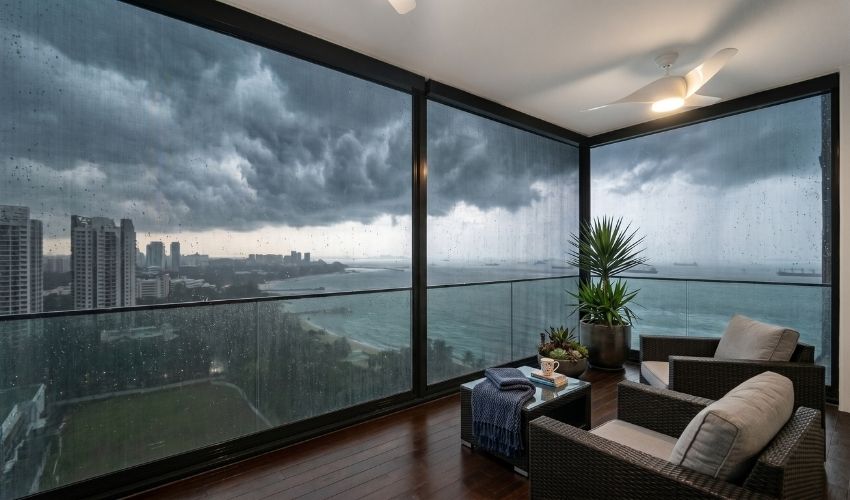
If you live on a high-floor unit in a coastal or unblocked area—such as a high-rise facing the sea in Marine Parade or overlooking the open fields of Punggol—wind load is a serious structural factor you cannot ignore.
During the June-to-September Southwest Monsoon or the intense year-end Northeast Monsoon, wind speeds on higher floors can put immense structural pressure on outdoor screens. Cheap or poorly engineered tracking systems often experience the “blowout” effect, where the fabric gets violently forced out of its side channels, permanently damaging the zipper mechanism.
ZipScreen was the first to undergo rigorous wind speed testing to ensure maximum durability. You can see the system in action, maintaining its integrity under extreme conditions, in our Ecohaus Wind Speed Testing Video.
An engineered system like a ZipScreen features side channels that lock the fabric securely along its entire length. This evenly distributes the wind pressure rather than concentrating it on a few weak points. Combined with high-grade, reinforced aluminum profiles, it ensures the system remains completely stable, rattle-free, and safe even during Singapore’s most intense thunderstorm warnings.
Navigating the Logistical Hurdles: MCST and URA Regulations
Before you put down a deposit with any vendor, you need to clear the regulatory hurdles. This is the part that catches many condo upgraders off guard.
1. Management Corporation Strata Title (MCST) Approvals
Every single condo development in Singapore has a unique set of design guidelines. Your MCST will mandate the exact fabric color, track frame finish, and overall visual appearance you are allowed to install. This is done to ensure the building maintains a uniform, premium aesthetic from the street view.
2. Urban Redevelopment Authority (URA) Compliance
Outdoor structures cannot permanently enclose a balcony in a way that converts it into permanent indoor Gross Floor Area (GFA). Because zip blinds use a flexible, roll-up fabric rather than solid glass or concrete walls, they are fully approved by the URA as a temporary solar shading device.
At Ecohaus, we believe in clear pricing and no surprises. We don’t just sell you a product; we handle the necessary paperwork and submission templates for your MCST before manufacturing begins, making the approval process completely seamless for you.
Pro-Tips for Maximizing Value and Saving Money
If you want to keep your installation straightforward and cost-effective without sacrificing quality, use these strategic insider tips:
- The Soft Brush Cleaning Routine: Singapore’s air carries a lot of urban dust and construction grit, especially in developing estates. Once every few months, use a soft-bristled brush or a dry microfiber cloth to wipe down the internal track channels. This prevents debris buildup from stressing the motor mechanism.
- The Obstacle Detection Advantage: When choosing your motorized system, always opt for a motor that features built-in electronic obstacle detection. If a stray balcony chair, potted plant, or toy gets left under the blind while it’s lowering, the motor will instantly detect the resistance and stop, saving you from a costly tracked fabric misalignment or motor burnout.
- The Smart Home Automation Sync: If you use Google Home, Apple HomeKit, or Alexa, ask about smart motor upgrades during your consultation. You can set automated schedules-such as lowering the screens completely at 1:00 PM to block the West sun before you get home from work, or syncing them with local weather sensors so they automatically drop when a sudden rainstorm is detected.
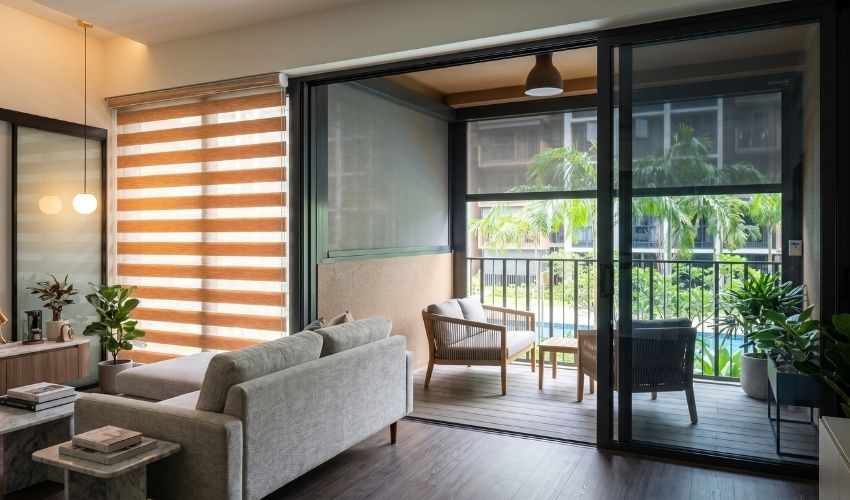
If you are looking to balance your balcony setup with indoor window styling, consider exploring how a sleek Korean Blind or Venetian Blind can elevate your living room interior while your outdoor tracks handle the heavy weather protection outside.
Conclusion: Making the Final Decision
At the end of the day, installing a motorized tracking system isn’t just about buying a window covering—it is about reclaiming valuable square footage in a country where residential real estate is at an absolute premium. If it lets you comfortably enjoy a morning coffee, dry your laundry safely without worrying about sudden rain, and shield your living room from intense heat, it easily pays for itself over time. Rooms feel calmer, and balconies turn into spaces you actually want to use.
Ready to see how a premium track system looks in your space? Don’t guess the measurements or risk MCST rejection.
We offer a 100% free on-site measurement and consultation with absolutely no obligation and no high-pressure sales tactics. Our local team will bring actual fabric swatches directly to your home, look at your floor plan, check your estate’s specific design guidelines, and help you design the perfect outdoor sanctuary.
Book Your Free On-Site Visit Now with Ecohaus