ZipScreen vs Outdoor Roller Blinds: Which Is Right for Your Singapore Home?
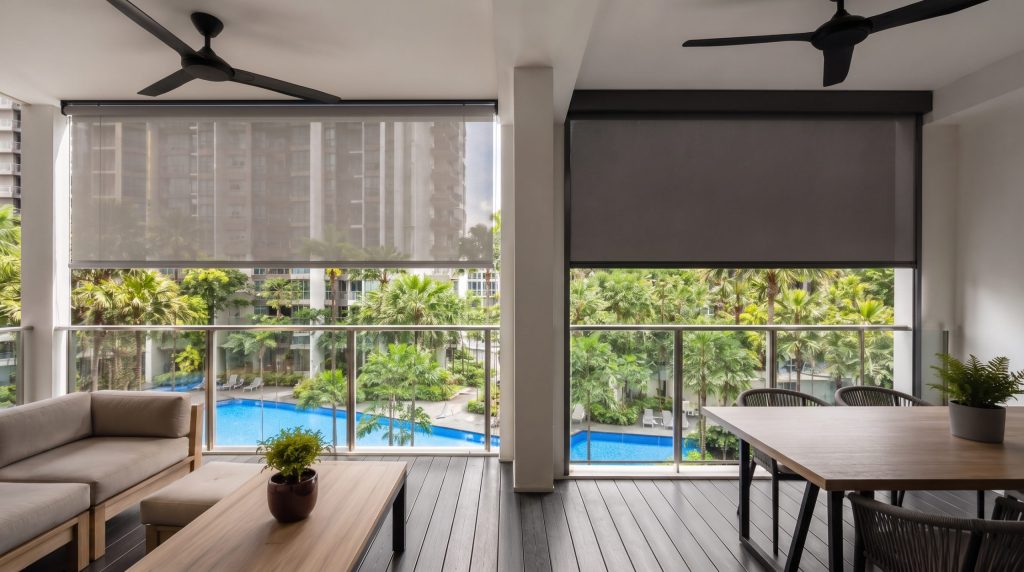
Singapore balconies and patios often look inviting in the morning, only to become hot, glaring or exposed to rain by late afternoon. Installing outdoor blinds can help make these spaces more comfortable, private and usable—but choosing the right system matters.
Two common choices are ZipScreen and outdoor roller blinds. Both provide outdoor shade, but they differ in their side-guiding systems, weather protection, appearance, price and suitability for exposed locations.
Ecohaus has helped homeowners across more than 10,000 HDB flats, condos and landed properties over 14 years. Based on our experience with Singapore homes, neither option is automatically better for everyone. The right choice depends on where the blind will be installed, how exposed the opening is and how you plan to use the space.
This guide compares ZipScreen vs outdoor roller blinds so you can make a more informed decision for your home.
What Is the Difference Between ZipScreen and Outdoor Roller Blinds?
Both systems use outdoor fabric that rolls neatly into a top-mounted enclosure. The main difference is how the sides of the fabric are secured.
Outdoor roller blinds
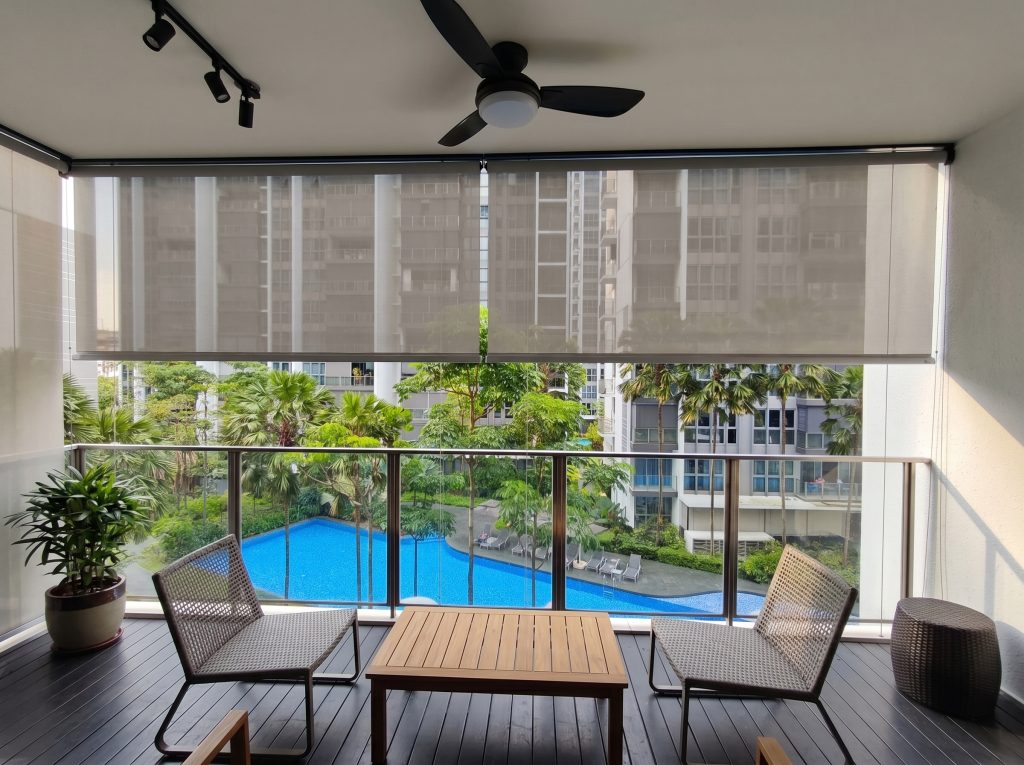
Outdoor roller blinds typically use stainless-steel cable side guides to guide the blind as it moves up and down. The cables help keep the blind aligned while maintaining a relatively open and lightweight appearance.
However, there will still be gaps between the fabric and the sides of the opening. These gaps allow some wind, rain splash and insects to enter.
Outdoor roller blinds are generally suitable for:
- Sheltered condo balconies
- Covered patios
- HDB service yards or outdoor areas
- Openings with lower wind exposure
- Homeowners seeking a more budget-conscious solution
ZipScreen
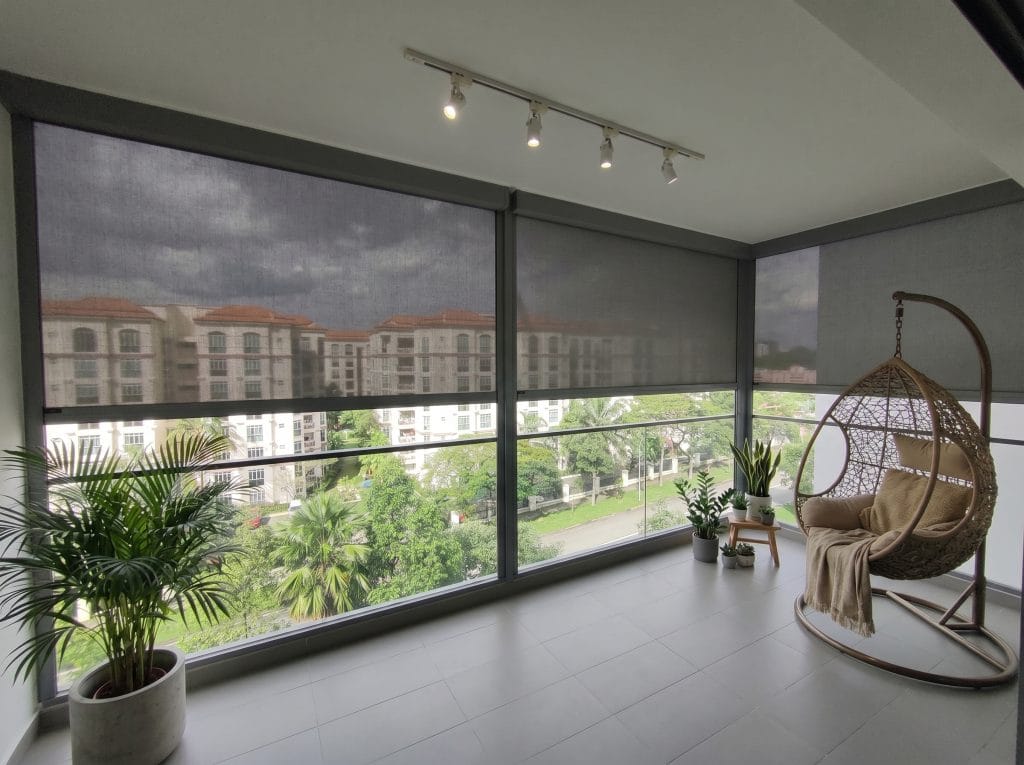
ZipScreen uses a zip-guided retention system built into aluminium side channels. The fabric edges are held securely within the tracks when the blind is lowered. This keeps the fabric more securely tensioned and reduces the open side gaps found in conventional cable-guided outdoor blinds.
ZipScreen is generally suitable for:
- Exposed condo balconies
- High-floor balconies
- Landed-home patios
- Pool decks and outdoor dining areas
- Wide openings
- West-facing spaces
- Areas affected by stronger wind and rain
The side-retention system is the main reason ZipScreen generally provides greater stability and weather protection than a conventional outdoor roller blind.
ZipScreen vs Outdoor Roller Blinds at a Glance
| Feature | ZipScreen | Outdoor Roller Blinds |
|---|---|---|
| Side-guiding system | Zip-guided aluminium side channels | Stainless-steel cable side guides |
| Wind stability | Higher | Moderate |
| Rain-splash reduction | Higher | Moderate |
| Side gaps | Fully Enclosed | Visible gaps at both sides |
| Insect resistance | Better | Limited |
| View-through fabric | Available | Available |
| Motorised operation | Available | Available |
| Typical price per panel | Approximately $2,000–$3,500 | Approximately $700–$1,500 |
| Best suited for | Exposed balconies, patios and outdoor living areas | Sheltered spaces and lower-wind locations |
Prices are estimates and depend on the panel dimensions, fabric selection, motorisation, installation access, electrical requirements and site conditions. A site assessment is needed before an accurate quotation can be provided.
Which Is Better for Windy Balconies?
For exposed or windy locations, ZipScreen generally performs better.
An outdoor roller blind’s cable guides help keep the blind aligned, but they do not secure the full length of the fabric edges. During stronger wind, the fabric may move or billow between the side cables.
ZipScreen retains the fabric within continuous side channels. This allows the fabric to remain more securely tensioned across the opening.
ZipScreen systems have also undergone controlled wind-resistance testing of up to 140 km/h.
For a high-floor condo balcony or an exposed landed-home patio, our team will need to assess the opening and surrounding structure before recommending the appropriate dimensions and configuration.
The system should also be raised during severe weather whenever advised by the product or motor manufacturer.
Which Provides Better Rain Protection?
ZipScreen generally provides better protection against wind-driven rain because its side channels reduce the gaps around the fabric.
However, neither ZipScreen nor an outdoor roller blind should be described as completely waterproof.
Singapore rain does not always fall vertically. During a thunderstorm, wind can push water through openings around the blind, bottom bar, floor or adjoining structure. Water may also enter when the blind is raised or when the direction of the rain changes.
The level of rain protection depends on:
- How exposed the balcony is
- Wind direction
- Surrounding walls and ceiling coverage
- Drainage and floor gradient
- Fabric openness
- Installation details
- Gaps around the structure
A 1% openness ZipScreen fabric can significantly reduce rain splash while retaining some view-through and ventilation. For stronger rain reduction, a 0% openness fabric may be considered.
A 0% openness fabric provides greater coverage but removes the outside view and reduces airflow. It also should not be presented as creating a fully waterproof room, since water may still enter from the bottom.
For sheltered balconies that mainly need sun and glare control, an outdoor roller blind may provide sufficient protection without the higher cost of a ZipScreen system.
Can ZipScreen Keep Mosquitoes Out?
ZipScreen can provide better insect resistance than an outdoor roller blind because the fabric is retained within the side channels.
When correctly installed, the reduced side gaps make it more difficult for mosquitoes and other insects to enter through the blind’s edges. This can make an outdoor dining or seating area more comfortable in the evening.
However, ZipScreen should not be presented as completely mosquito-proof.
Its effectiveness depends on:
- Whether the bottom bar sits closely against the floor
- Gaps around columns, railings and adjoining walls
- Floor level and drainage openings
- The overall balcony structure
- Installation accuracy
Outdoor roller blinds leave larger gaps at both sides, so they offer less insect resistance.
For homeowners who regularly use their patio or balcony for dining, entertaining or children’s activities, ZipScreen may be an important advantage.
Which Is Better for Afternoon Sun and Heat?
Both systems can reduce direct sunlight, glare and UV exposure when fitted with the right fabric.
This can be particularly helpful for west-facing homes in areas such as Tampines, Sengkang, Serangoon and Bukit Timah, where balconies and patios may receive strong afternoon sun.
The system itself matters, but fabric selection is equally important.
1% openness fabric
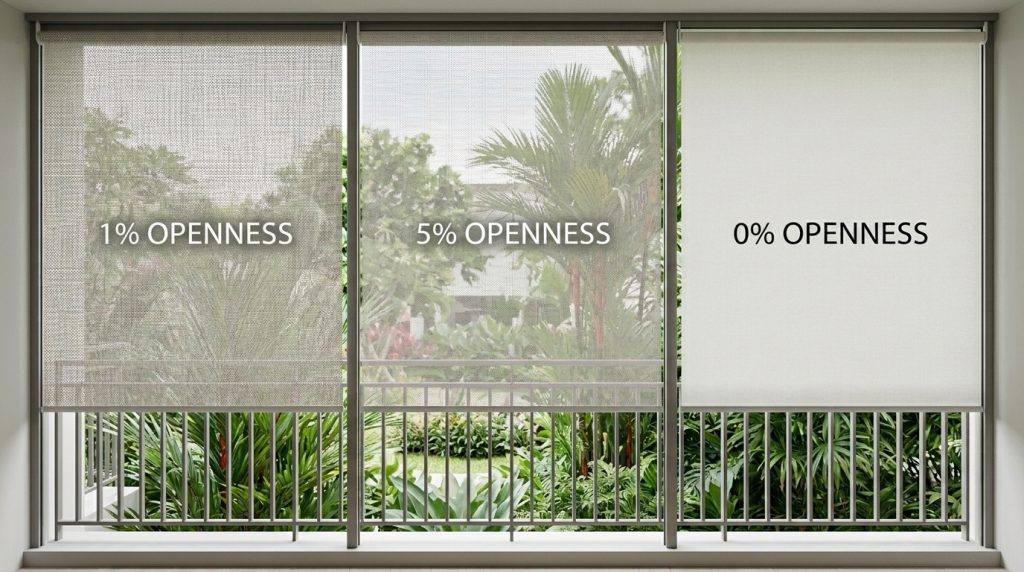
A 1% openness fabric provides greater coverage while still retaining a degree of outward visibility.
It is commonly selected for ZipScreen installations where homeowners want:
- Stronger glare reduction
- More daytime privacy
- Better heat control
- Some outside view
- Reduced rain splash
Because less light passes through the fabric, the outside view may appear darker than with a more open mesh.
5% openness fabric
A 5% openness fabric allows more light and airflow through the blind while maintaining a clearer outside view.
It may be suitable for sheltered outdoor roller blind installations where the main priorities are:
- Reducing glare
- Softening sunlight
- Retaining ventilation
- Preserving the outdoor view
It offers less privacy and weather coverage than a lower-openness fabric.
0% openness fabric
A 0% openness fabric provides the highest level of coverage among these options.
It is suitable for homeowners prioritising:
- Privacy
- Stronger heat reduction
- Greater rain-splash protection
- Reduced direct sunlight
However, it blocks the view and significantly reduces airflow.
There is also no true outdoor blackout effect in the same way as an indoor blackout curtain installed in a dark room. Light may still enter around the blind, surrounding structure and edges of the opening.
Which One Looks Better?
Appearance is subjective, but ZipScreen generally produces a more structured and integrated finish.
Its aluminium side channels frame the opening, while the retained fabric remains tensioned between the tracks. When installed across a suitable balcony or patio, it can make the area feel more like an extension of the indoor living space.
Outdoor roller blinds have a lighter and more open appearance. The stainless-steel cable guides are less visually substantial than full aluminium tracks, which may suit homeowners who prefer a simpler shade solution.
For wider outdoor roller blinds, some movement or slight fabric variation can occur over time because the edges are not fully retained. The extent depends on the dimensions, exposure, fabric and frequency of use.
How Much Do ZipScreen and Outdoor Roller Blinds Cost in Singapore?
As a general Ecohaus guide:
- ZipScreen: Approximately $2,000 to $3,500 per panel
- Outdoor roller blinds: Approximately $700 to $1,500 per panel
These are estimated ranges rather than fixed package prices.
The final quotation will depend on:
- Width and height
- Number of panels
- Fabric type
- Manual or motorised operation
- Motor and control specifications
- Installation height
- Scaffolding or special access requirements
- Electrical preparation
- Site structure and fixing conditions
- Custom finishing requirements
ZipScreen costs more because it includes a more complex side-retention system, aluminium tracks, precise fabrication and installation requirements.
Outdoor roller blinds are generally more affordable because their cable-guided system is simpler.
The lowest-priced option is not always the most cost-effective choice. Installing a cable-guided blind in a highly exposed opening may result in more fabric movement and less weather protection than expected. At the same time, homeowners should not pay for ZipScreen when a sheltered space only requires basic shade and privacy.
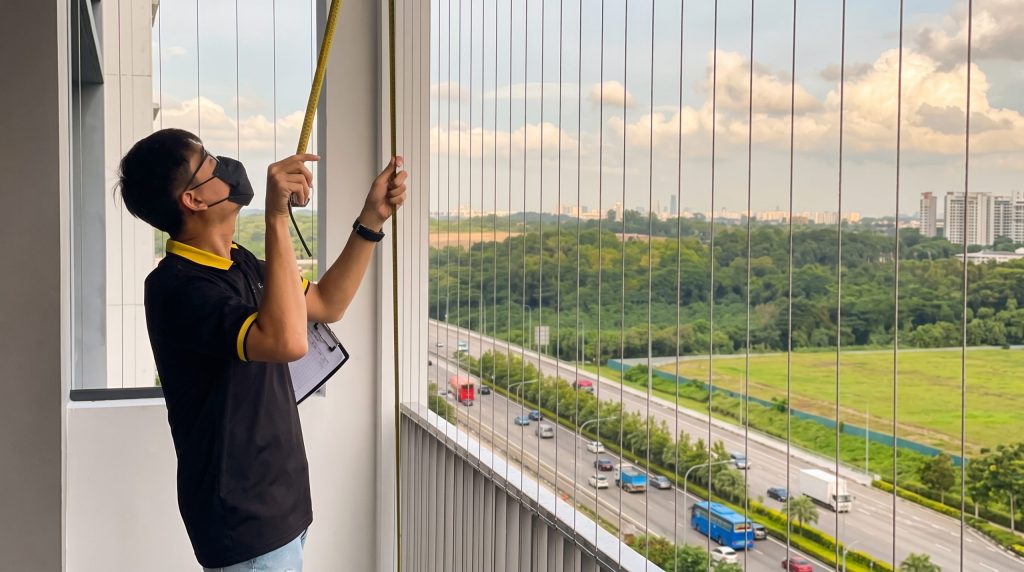
A proper site assessment helps avoid both situations.
Manual or Motorised Outdoor Blinds?
Depending on the product configuration, outdoor blinds may be operated manually or with a motor.
Motorisation is particularly useful for:
- Large or heavy blinds
- Wide balcony openings
- Multiple panels
- High installation points
- Frequently adjusted blinds
- Homeowners seeking convenient daily operation
ZipScreen is commonly motorised because maintaining controlled and even movement is important for the zip-guided system. Motorised outdoor roller blinds are also available, depending on dimensions and site suitability.
The motor, controls, power supply and electrical preparation should be confirmed before installation. Retrofitting a motor later may be possible for certain systems, but planning for it from the beginning is usually easier and more cost-efficient.
Maintenance and Everyday Care
Both systems require relatively straightforward maintenance.
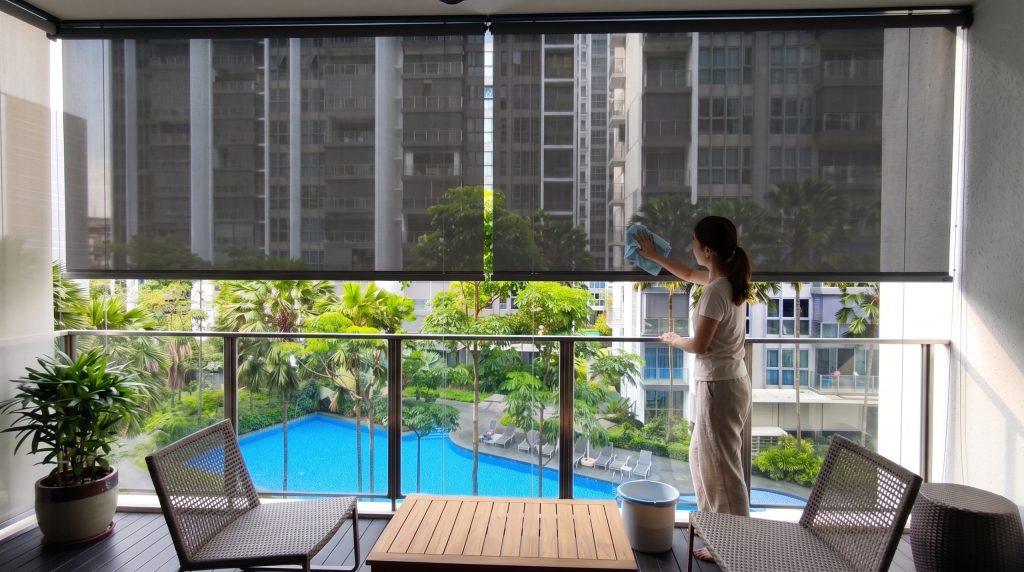
ZipScreen maintenance
- Remove dust and debris from the side tracks
- Wipe the fabric using a soft cloth
- Avoid pulling or forcing the fabric
- Keep objects away from the blind’s travel path
- Stop operating the system if the blind becomes misaligned
- Arrange an inspection if unusual sounds or movement occur
Outdoor roller blind maintenance
- Wipe the fabric using a damp, soft cloth
- Check that the stainless-steel cable guides remain secure
- Keep the bottom bar clear of furniture and objects
- Avoid operating the blind during unsuitable weather
- Report excessive movement or uneven rolling early
Do not use harsh chemicals or abrasive brushes unless approved for the specific fabric. Outdoor blinds should be fully dry before being rolled up for an extended period. Rolling wet fabric into the enclosure may encourage dirt accumulation, odour or staining.
When Should You Choose ZipScreen?
ZipScreen may be the better option when:
- Your balcony or patio is exposed to stronger wind
- You live on a higher floor
- Your space receives direct afternoon sun
- You want greater rain-splash reduction
- You regularly use the space for dining or entertaining
- You want to reduce side gaps
- Insect resistance is an important consideration
- You prefer a clean, structured appearance
- You want a motorised outdoor living solution
- You are creating a more usable extension of your home
For regularly used balconies and patios, the higher investment may be worthwhile because ZipScreen provides stronger all-round performance.
When Should You Choose Outdoor Roller Blinds?
Outdoor roller blinds may be sufficient when:
- Your balcony or patio is sheltered
- The opening has lower wind exposure
- Your main concern is sunlight or privacy
- You prefer a more affordable solution
- You want to retain a lighter, more open appearance
- You do not require extensive side coverage
- The outdoor area is used occasionally
- You are shading a smaller opening
- Faster fabrication and installation are priorities
A properly specified outdoor roller blind can still be a practical and durable solution for the right location.
The important point is to match the product to the site rather than choosing based only on appearance or price.
ZipScreen vs Outdoor Roller Blinds: Which Is Better?
There is no single answer for every Singapore home.
Choose ZipScreen when you need stronger wind stability, greater rain-splash reduction, smaller side gaps and a more integrated outdoor-living solution.
Choose outdoor roller blinds when the opening is sheltered and your main priorities are shade, privacy, simplicity and affordability.
Before deciding, consider:
- How exposed the space is
- Which direction it faces
- How strong the afternoon sun is
- Whether wind-driven rain enters
- How often the area is used
- Whether insects are a concern
- Whether retaining the outside view is important
- Your preferred level of automation
- Your available budget
Choosing the right outdoor blind is not only about covering an opening. It is about making your balcony, patio or outdoor area more comfortable and usable without installing a system that is unsuitable for the site.
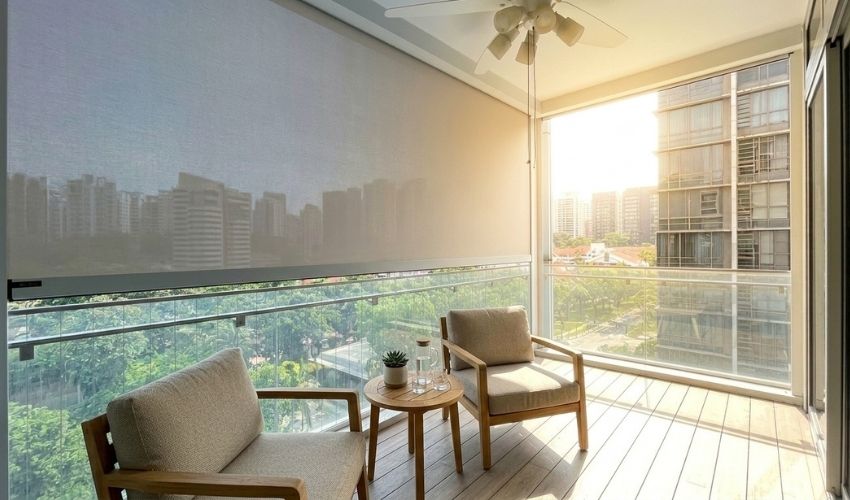
Get an Outdoor Blind Recommendation for Your Home
Not sure whether your space needs ZipScreen or an outdoor roller blind?
Ecohaus provides a free, no-obligation site consultation. Our team can assess your opening, exposure, measurements and intended use before recommending the more suitable system and fabric.
You will receive a recommendation based on your home, lifestyle and budget—not simply the most expensive option.
Book your free Ecohaus consultation today and find the right outdoor blind for your Singapore home.