PVC, Wood or Aluminium? The Smart Buyer’s Guide to Venetian Blinds for Humid Singapore Rooms
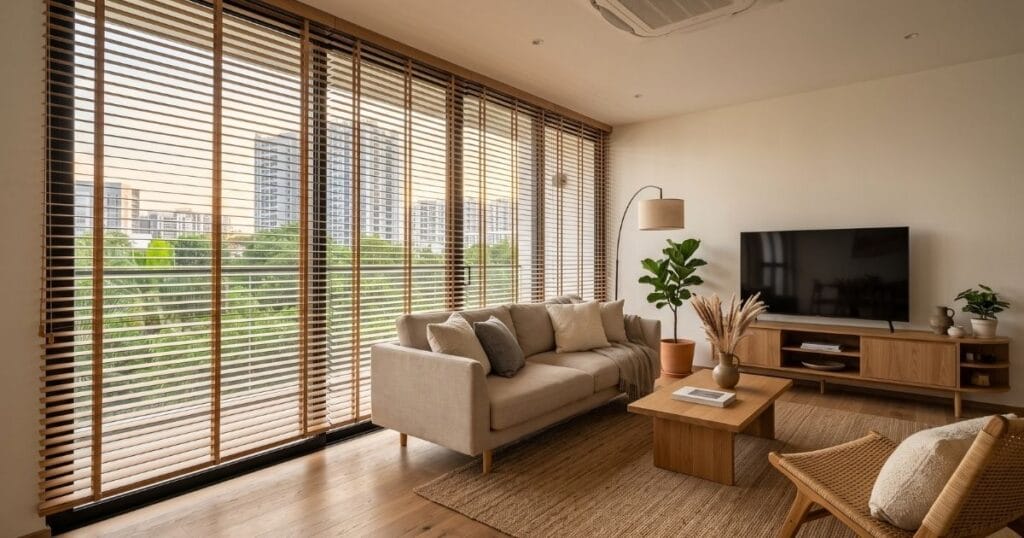
The Venetian blinds Singapore homeowners choose must cope with persistent humidity, strong sunlight and changing room conditions. That makes the slat material more than a design decision. It can affect how well the blinds resist moisture, heat and everyday wear.
PVC, real wood and aluminium each perform differently. The best choice depends on whether you are furnishing a bathroom, kitchen, service yard, bedroom or living room. This guide compares the three materials and explains where each option works best.
Quick Answer: Venetian Blinds Material Comparison for Singapore Homes
| Material | Humidity Resistance | Best For | Look & Feel | Main Drawback |
| Real Wood | Poor–Moderate — absorbs moisture, can warp, fade or crack | Living rooms, bedrooms, studies (dry, air-conditioned spaces) | Natural grain, premium warmth | Not suited to bathrooms or kitchens |
| Polystyrene (upgraded PVC) | Excellent — heat-stable up to 60°C, fully moisture-resistant | Bathrooms, kitchens, laundry/service yards | Convincingly mimics real timber | Slightly less “authentic” texture up close vs real wood |
| Standard/budget PVC | Fair — moisture-resistant but can still warp under sustained direct heat | Low-budget, low-sun-exposure areas only | Often uneven or plasticky at lower grades | Heat distortion on west-facing windows |
| Aluminium | Excellent — fully waterproof, won’t rot or swell | Offices, utility rooms, rental units | Slim, minimal, more industrial | Dents easily, rattles in wind/aircon draft, less common in curated residential settings |
| 📐 Not sure which fits your unit’s layout? Book a free on-site measurement and we’ll map out the humidity zones in your home room by room before recommending a material, at no obligation. |
Venetian Blinds Singapore: PVC, Wood and Aluminium Compared
Real Wood: Best for Dry Living Areas
Nothing beats the natural grain and warmth of real timber slats — they’re genuinely excellent at absorbing and withstanding intense solar heat, which is why they suit sun-facing living rooms and bedrooms so well. The honest catch: in a non-stop humid climate like ours, real wood can warp, fade or crack over time, especially anywhere near steam, splashes or standing moisture. That’s not a defect — it’s simply what timber does when it’s asked to live in a bathroom. Keep real wood in dry, air-conditioned rooms and it’ll hold up beautifully for years.
Polystyrene and PVC: Better for Humid Rooms
This is where a lot of Singapore homeowners get misled. “PVC” and “moisture-resistant” get used loosely in marketing, but standard, budget-grade PVC can still soften and warp when it takes direct heat on a west-facing window for years. A genuinely humidity-proof faux-wood slat needs a heat rating attached to the claim — our Polystyrene range, for example, is rated heat-stable up to 60°C and doesn’t absorb odours or deform under repeated splashing, which is a meaningfully different product from a generic “PVC blind” listing with no spec behind it. If a quote just says “waterproof PVC” with no heat tolerance stated, that’s worth asking about before you buy.
Aluminium: Waterproof but More Functional in Appearance
Aluminium slats are fully waterproof and won’t rot, swell or absorb odour — on paper, an obvious humidity solution. In practice, they’re less common in curated Singapore residences for a few reasons: the slats dent and bend easily on contact, they tend to rattle against the window frame in wind or direct aircon draft, and the finish reads more “server room” than “home.” They’re a reasonable fit for a utility space or a rental unit where budget and low maintenance matter more than look and feel.
To be transparent: our in-house venetian blind range is currently Real Wood and Polystyrene — we haven’t listed aluminium as a stocked option. If your search brought you here specifically for aluminium, it’s worth a conversation with our team; our Polystyrene range was built to solve the same humidity problem with a warmer, more residential finish, so it’s often the better-fitting answer even when aluminium was the original ask.
Room-by-Room: Best Venetian Blinds Material for Every Space
Most guides stop at “wood for dry areas, PVC for wet areas.” That’s true, but it skips the detail that actually matters in a Singapore flat: HDB bathrooms and kitchens are often smaller and less ventilated than condo equivalents, so moisture builds up and lingers even with an exhaust fan running. Here’s how that plays out room by room.
Best Venetian Blinds for Bathroom Singapore Homes
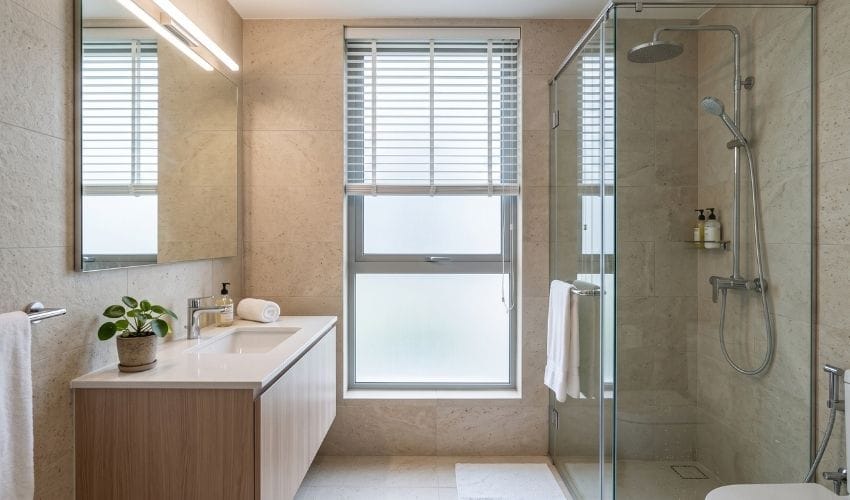
Bathrooms take direct splashes and sustained steam, and in a typical HDB layout, that moisture has nowhere to go quickly. This is a strict Polystyrene-only zone — real wood and budget PVC will both show damage here within a year or two. Look for a slat rated against odour absorption too, since a small, enclosed bathroom is exactly where a cheap material starts to smell musty.
Best Venetian Blinds for Kitchen Singapore Homes
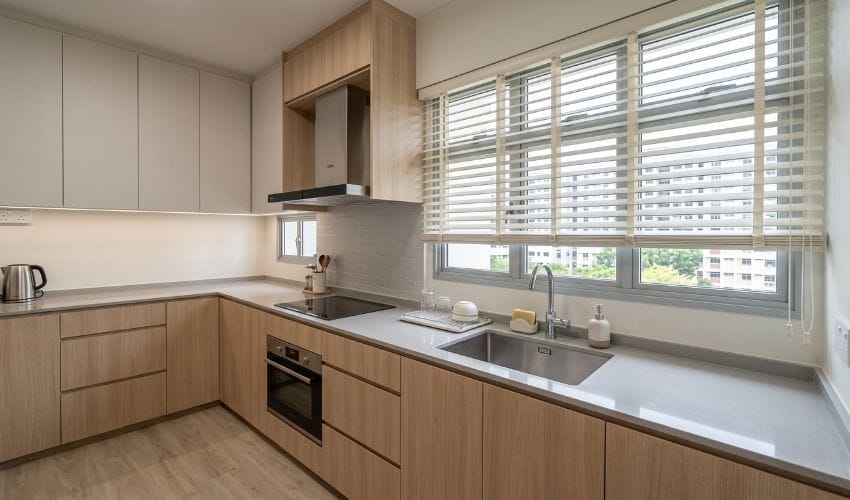
Kitchens combine steam with airborne grease, which settles on horizontal slats the same way it settles on your hood and tiles. Polystyrene wins here for the same moisture reasons as the bathroom, with the added benefit that grease wipes off cleanly instead of soaking into the material the way it would with real wood.
Service Yard and Laundry Area
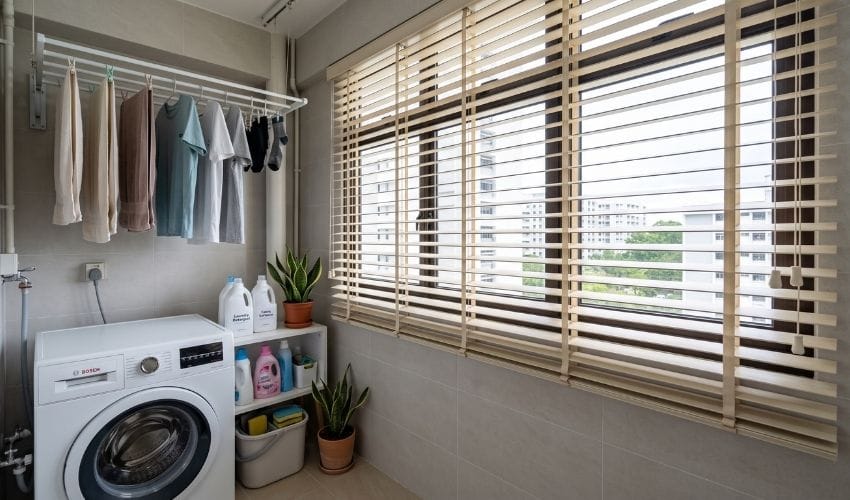
Yards catch driving rain through the grille and constant humidity from drying laundry. Treat this the same as a bathroom: Polystyrene, not wood, and not budget PVC if the yard gets direct rain exposure.
Living Room and Dining Area
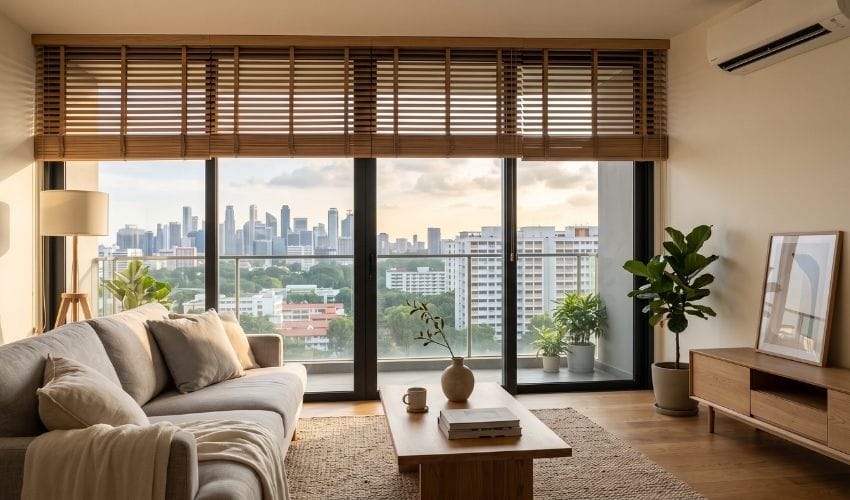
This is usually your driest, most air-conditioned zone, and where real wood genuinely earns its place — it’s also where the “statement piece” argument for timber makes the most visual sense, since it’s on show for guests.
Bedroom and Study
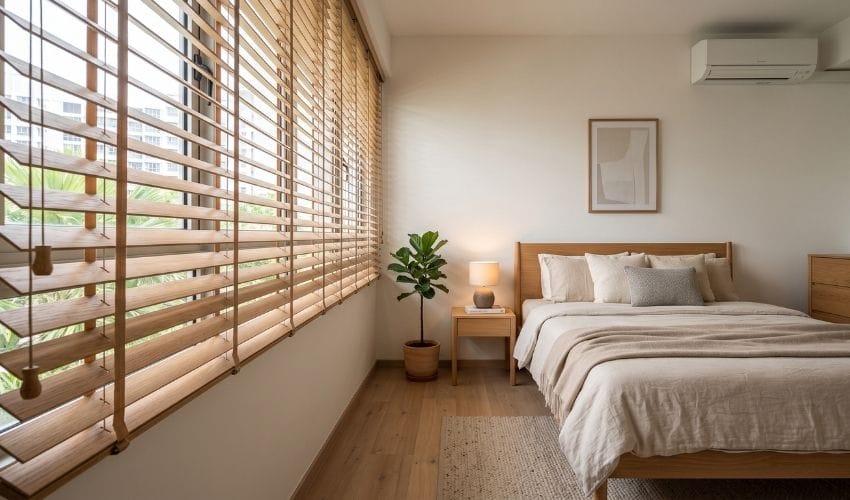
Also a dry-area candidate for real wood, with the added benefit of precise light control for screen glare (home office) or a darker sleep environment. Worth knowing upfront: venetian blinds dim a room and give excellent privacy, but the small routed cord holes and slat overlaps mean they can’t deliver a full, pitch-black blackout the way a dedicated blackout roller can.
Balcony
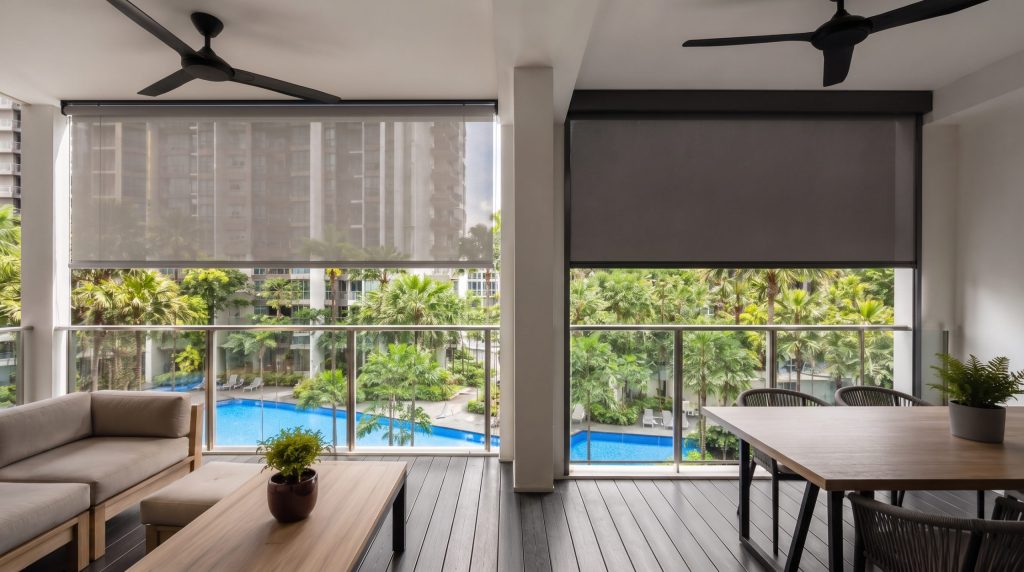
Venetian blinds aren’t the right tool here — an exposed balcony deals with wind and driving rain that horizontal slats aren’t built for. If you’re trying to solve heat, glare or rain on a balcony, an outdoor roller blind or ZipScreen is the more honest answer, and our team will say so rather than force-fit a venetian there.
| 💬 Get a room-by-room recommendation: WhatsApp our team at +65 9830 3787 with your unit type (HDB/condo/landed) and we’ll flag which rooms need Polystyrene versus where real wood will thrive. |
Faux Wood (Polystyrene) vs Real Wood: Which Should You Actually Choose?
Start by considering how much moisture the room receives. Bathrooms, kitchens and service yards regularly face steam or splashes, making moisture-resistant Polystyrene the more practical option. Real wood is generally better suited to drier spaces such as living rooms, bedrooms and studies, where its natural grain adds warmth and character. Instead of selecting one material for the entire home, match each Venetian blind to the conditions of the room.
The Honest Buyer’s Checklist: 6 Red Flags Before You Sign
- “Waterproof” with no heat rating stated. A humidity claim without a temperature tolerance (e.g., °C) attached is a marketing line, not a spec.
- No warranty terms in writing. Ask exactly what’s covered and for how long — manual and motorised systems typically carry different warranty periods.
- No on-site measurement offered. Custom blinds require your actual window dimensions; a phone-quote-only vendor is guessing.
- No mention of cord safety. If you have young kids or pets, ask whether safety cleats or a mono-cord system are included as standard.
- Vague on “real wood” vs “wood-look.” These are different products at different price points — get it specified in the quote, not just described verbally.
- Rock-bottom pricing with no material spec sheet. If a quote is unusually cheap, ask what grade of PVC or timber is actually being installed.
| ✅ Get a straight answer, in writing: Request your free quote — we give upfront, itemised pricing with no hidden fees, so you can compare it properly against anyone else’s. |
Frequently Asked Questions
Are venetian blinds good for humid climates like Singapore?
Yes, if you match the material to the room. Polystyrene slats are built for constant humidity and won’t warp or absorb moisture. Real wood isn’t — it belongs in dry, air-conditioned spaces only.
What are the best venetian blinds for a bathroom in Singapore?
Polystyrene, without exception. It resists steam and direct splashes, won’t absorb odour, and holds up in the low-ventilation conditions typical of HDB bathrooms.
What are the best venetian blinds for a kitchen in Singapore?
Also Polystyrene — it handles steam and grease without staining or softening, and wipes clean far more easily than real timber.
Faux wood vs real wood blinds — which lasts longer in Singapore?
In a dry room, real wood can last for years and looks the part. In anywhere humid, faux wood (Polystyrene) will consistently outlast it — real wood’s warping risk goes up sharply with sustained moisture exposure.
Can I get aluminium venetian blinds in Singapore?
Aluminium options exist in the broader market, generally suited to offices or budget rental fit-outs. We don’t currently manufacture or stock aluminium venetian blinds in-house — our Polystyrene range was purpose-built as the humidity-proof option for Singapore homes, with a warmer, more residential finish.
Do venetian blinds give a full blackout?
No — they dim the room and give strong privacy, but small gaps at the cord holes and slat overlaps mean a small amount of light always filters through. If full blackout is the priority for a bedroom, ask us about pairing venetians with a blackout layer.
What’s the warranty on venetian blinds?
1 year for manual systems, 3 years for motorised systems, covering the motor, internal hardware and moving parts.
Ready to stop guessing which material your room actually needs? Book a free on-site measurement with our team — 14 years and 10,000+ homes in, we’ll tell you honestly if a room doesn’t need what you think it does.