Combi Blinds vs Roller Blinds: What’s the Real Difference for Singapore Homes?
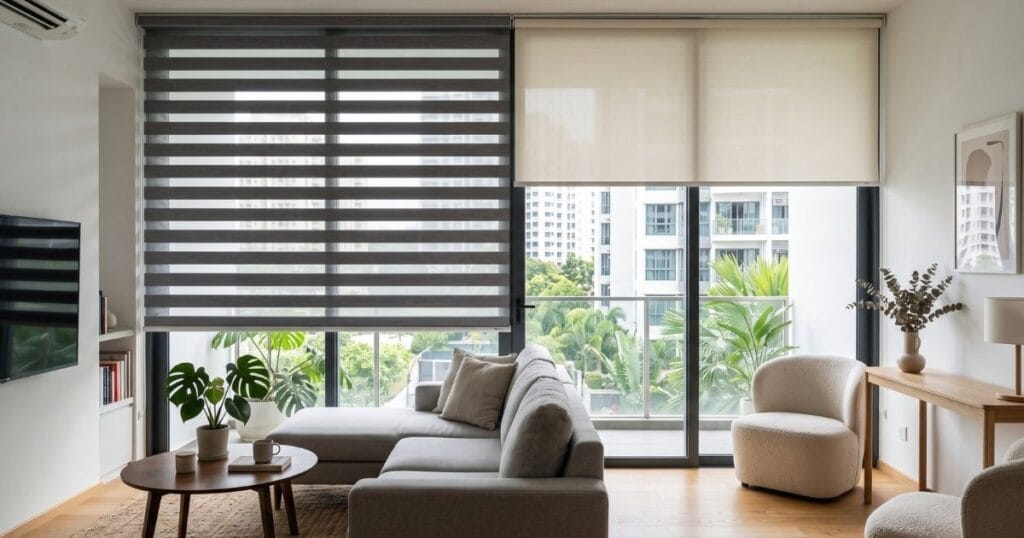
Combi blinds vs roller blinds — it’s the question every Singapore homeowner runs into once they start comparing window treatments. Scroll through enough renovation inspiration and two styles keep showing up. One is a clean, single-panel roller blind. The other is a striped, dual-layer blind that goes by several names — Korean blinds, combi blinds, shadow blinds, sometimes even Trishade. Are they the same thing? Is one objectively “better”? And does the name actually matter when you’re the one picking fabric for your own windows?
Short answer: two of those names describe the exact same product. The real decision isn’t about naming — it’s about how you actually want to live with your windows day to day. Here’s the honest breakdown, based on what we’ve seen fitting windows across HDB flats, condos, and landed homes in Singapore for 14 years.
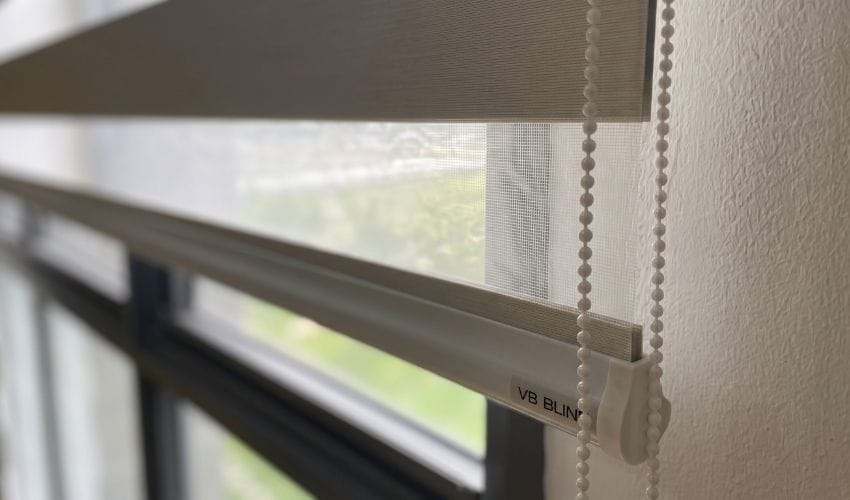
What Are Combi Blinds, Really?
Combi blinds are built from two layers of fabric on a single roller — alternating horizontal bands of sheer mesh and solid fabric. Shift the layers so the sheer sections line up, and soft daylight filters through. Shift them the other way so the solid bands overlap, and you get instant privacy. It’s this back-and-forth control, without ever needing to fully raise or lower the blind, that’s made them one of the most requested window treatments in Singapore homes over the past few years.
You’ll see this same product marketed under several names, which is where a lot of the confusion comes from. Korean blinds, rainbow blinds, and zebra blinds all refer to the striped, dual-layer look. Shadow blinds and sheer-and-opaque blinds describe the same functional idea — alternating see-through and solid fabric. Some suppliers even sell a closely related two-sheer-layer product under names like Trishade or Shangri-La blinds, which softens light rather than fully blocking it. In everyday Singapore retail, though, “combi blinds” and “Korean blinds” are the two names doing most of the heavy lifting, and that’s the terminology we use in our own collection.
One honest caveat worth knowing upfront: because of the layered construction, there’s a small functional gap between the two fabrics. Combi blinds give you excellent light and privacy control, but they can’t achieve a true 100% blackout the way a dedicated blackout fabric can. If pitch-black darkness is non-negotiable for your sleep, that’s worth factoring in early.
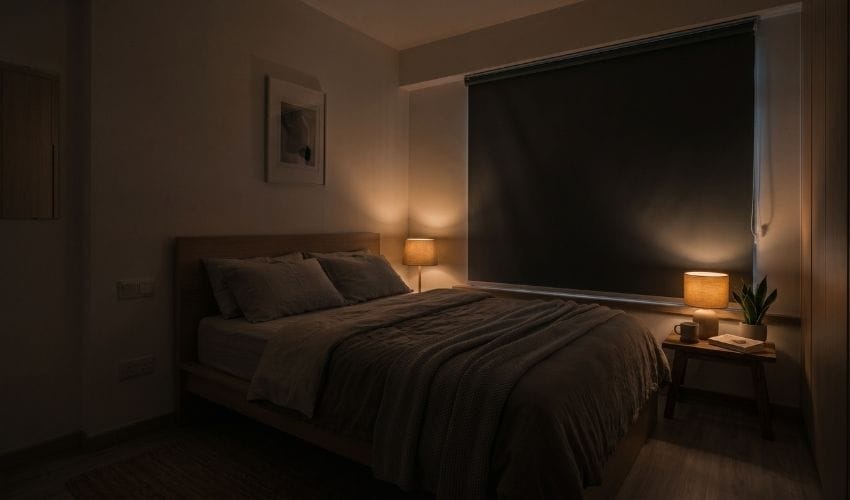
What Are Roller Blinds? Singapore’s No-Fuss Classic
Roller blinds are the simpler, older sibling — a single flat panel of fabric that rolls up onto a tube, stopping at whatever height you need. What you get depends entirely on the fabric you choose: a sunscreen fabric filters light and glare while keeping a view of the outside, or a blackout fabric shuts a room down completely for sleep. Either way, that opacity is fixed once you’ve picked the fabric — you’re not shifting between light and privacy within the same blind the way you can with combi blinds.
That simplicity is exactly why roller blinds remain a Singapore staple. Fewer moving parts, a cleaner minimalist look, and a wider range of solid colours and patterns to match almost any interior style.
If you’re picturing your own windows as you read this, it helps to see the fabrics and mechanisms in person rather than guess from photos. Our team can bring swatches to your home for a free, no-obligation measurement — no hard sell, just a clearer picture of what actually works for your unit.
Combi Blinds vs Roller Blinds: The Real Differences
| Feature | Combi Blinds (Korean Blinds) | Roller Blinds |
|---|---|---|
| Light control | Continuously adjustable by shifting the two layers | Adjustable by height; opacity is fixed by the fabric chosen |
| Full blackout | Not 100% — a small gap between layers lets in a little light | Yes, with a dedicated blackout fabric |
| Privacy at night | Excellent with a blackout base fabric; a soft silhouette is possible with dimout fabric | Excellent with blackout fabric |
| Look and feel | Horizontal striped pattern; tends to make smaller rooms feel wider | Clean single panel; minimalist and versatile across colours |
| Maintenance | Weekly dusting; a little more care needed around the sheer mesh section | Simple wipe-down; fewer delicate parts |
| Typical cost | Generally sits above roller blinds, given the double-layer fabric and mechanism | Generally more affordable, thanks to the simpler build |
| Best for | Rooms where you want to flex between daylight and privacy through the day | Bedrooms needing full darkness, budget-conscious rooms, high-traffic spaces |
A few of these deserve more context than a table row can give.
Heat and glare
Combi blinds do soften Singapore’s harsh afternoon sun and cut down glare noticeably, but a solid, single-panel blackout roller blind still blocks more heat overall. If you’re dealing with a west-facing unit that turns into an oven by 4pm, that’s a genuine trade-off to weigh, not just a style preference.
Cost
We won’t throw out a per-metre figure here, because your actual quote depends on fabric grade, window size, and whether you motorise — and giving you a made-up number wouldn’t actually help you budget. What we can say honestly, and what holds true across the Singapore market generally, is that combi blinds tend to cost more than roller blinds simply because you’re paying for two fabric layers and a more complex mechanism instead of one. Book a free on-site measurement and we’ll walk you through real numbers for your specific windows — clear pricing, no surprise line items at the end.
Combi Blinds vs Roller Blinds: Which Fits Your Room?
The right answer changes room by room, which is honestly the more useful way to think about this than picking one “winner” for the whole home.
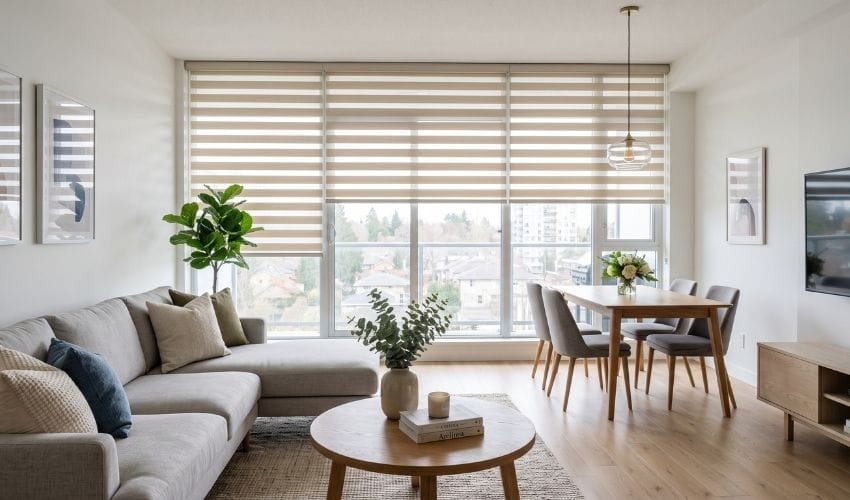
Living and dining rooms
This is where combi blinds tend to shine. A dimout fabric (typically in the 60–70% range) turns harsh midday glare into a softer, more comfortable light while still shielding furniture from UV fading — without shutting the room off from the outside world entirely.
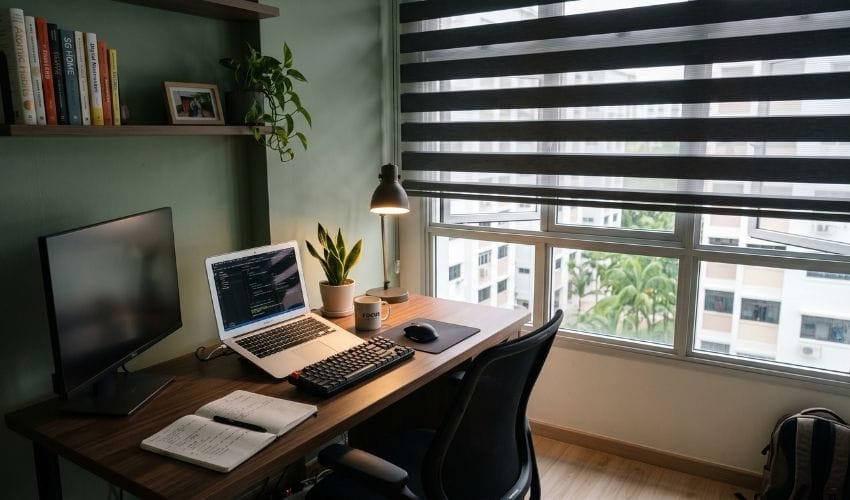
Bedrooms and home offices
A denser, 80–90% blackout combi fabric creates a more focused, dimmer environment for work-from-home days or naps, while still letting in filtered light when you want it. But if you need genuinely pitch-black darkness for deep sleep — not just dim, but dark — we’d rather tell you upfront that a blackout roller blind or heavy curtains will do that job more completely than combi blinds can.
Kids’ rooms and gaming or media rooms
Combi blinds are a popular pick here too, largely for the flexibility of dialling privacy up or down without a full roll-up or roll-down each time.
Windows near open ventilation or exposed to wind and rain
One thing we always flag honestly: don’t leave combi blinds rolled down with the window open in strong wind, since the two fabric layers can tangle or warp, and a sudden shower can damage the fabric. If a window regularly gets wind or rain exposure — think exposed balcony openings — a roller blind, or a purpose-built outdoor blind, is usually the more practical choice.
What About Shadow Blinds and Sheer-and-Opaque Blinds — Are They the Same Thing?
Yes. “Shadow blinds” and “sheer and opaque blinds” are simply other names circulating in the Singapore market for the same dual-layer combi blind construction — alternating see-through and solid fabric bands on one roller. Different suppliers lean on different names for marketing reasons, but functionally you’re looking at the same product family described earlier in this post.
If a showroom uses one term and another uses a different one, don’t let that be the deciding factor. The questions that actually matter are: what dimout or blackout percentage does the fabric offer, is it manual or motorised, and does it suit the specific room you’re fitting it in.
Quick Decision Guide
- Want the most flexible light control through the day? Combi (Korean) blinds.
- Need a genuinely pitch-black room for sleep? Roller blackout blinds, or curtains.
- Working with a tight budget or a simple, low-maintenance look? Roller blinds.
- Want a design-forward look that visually widens a smaller room? Combi blinds.
- Fitting a window exposed to wind and rain? Roller blinds, or a dedicated outdoor blind.
Getting It Right for Your Home
Whether you land on combi blinds vs roller blinds for your own home, the right choice comes down to the room, not a blanket rule. We’ve fitted both across more than 10,000 homes in Singapore over 14 years, from HDB flats to landed properties, and the pattern that holds up every time is that the best choice comes from seeing the fabric against your own light conditions, not from a blog post alone.
If you’re ready to see combi and roller fabrics side by side in your own space, our specialists offer a free, no-obligation on-site measurement — honest pricing upfront, and real after-sales support if you ever need it once the blinds are up.
Quick Answers
Are combi blinds the same as Korean blinds?
Yes — combi blinds and Korean blinds are the same product, and you’ll also see it marketed as rainbow blinds, zebra blinds, shadow blinds, or sheer-and-opaque blinds depending on the supplier.
Can combi blinds achieve full blackout?
Not quite 100%. The layered construction leaves a small functional gap, so a little light can still get through even with a blackout-grade fabric. For total darkness, a blackout roller blind or heavy curtains does the job more completely.
Which is cheaper, combi or roller blinds?
Roller blinds are generally more affordable, since they use a single fabric layer and a simpler mechanism. Combi blinds typically cost more due to the double-layer fabric and mechanism — but the exact difference depends on your fabric choice and window size.